By Dennis Weaver, preparedpantryblog.com,  May 13, 2013

This is the omelet for the omelet challenged.  Never make an ugly omelet again.  It’s nearly foolproof, it’s simple, and it’s quick.

We set off to make the best and easiest omelet, something that even a beginning cook could master.  We bought ten dozen eggs and started testing methods.  At the end, we were making five minute omelets—a little unorthodox but very good and nearly foolproof.

We called them “five minute omelets.”  You really can cook them in five minutes.  And the method is easy.

If you’ve ever made an omelet that didn’t fold well or broke apart or had a tough skin, consider this method.

The Method
Getting the omelet to cook through without over cooking the skin is a challenge. You can lift the edges of the omelet as it cooks to let the uncooked egg flow under the omelet and onto the pan surface. You can put a lid on top to trap heat coming from the hot pan.
But for some omelets, that isn’t enough. A surer method is start scrambling the eggs when they hit the hot pan, stopping when the eggs are partially cooked. Then pat the eggs into a smooth layer and let them finish cooking without a lid. It works. It’s quick and easy.
Instead of folding the omelet in the pan, simply tip the pan and let the omelet slide onto a plate. As the omelet slips onto the plate, twist of the wrist, and fold the omelet onto itself on the plate. (It’s easy to do; in two or three tries, you’ll have the method mastered.)
This method worked so well that we declared a victory. We recorded our methods, developed a couple of recipes, and described the method in an email.
Later we started placing a plate over pan for just a couple minutes once we stopped scrambling and then removing the plate before the omelet was cooked. That accelerated the cooking a little and gave us warm plate on which to serve the omelet but we didn’t leave it on long enough to hide when the omelet was done.

We had perfect omelets in five minutes.  Step-by-step instructions below.

WHAT'S THE KEY TO SUCCESS?  IT'S THE PAN.  IT HAS TO BE THE RIGHT SIZE-- AN EIGHT-INCH PAN FOR A THREE-EGG OMELET-- AND ABSOLUTELY NONSTICK OR THE OMELET WON'T SLIDE FROM THE PAN.
How to Cook an Omelet Using This Method

  1. Choose the right size pan.  A three-egg omelet requires an eight-inch pan.  The pan should be nonstick.
  2. Whisk the eggs together in a bowl.
  3. Put a pat of butter in your nonstick pan.  Place it on medium-high heat.  On our stovetop, a high BTU gas burner, that’s 6 out of ten.  Heat the butter to just short of brown and swirl it around the pan.
  4. Pour the eggs into the hot pan.  Salt and pepper the eggs.
  5. Scramble the eggs with a soft silicone spatula scraping the bottom of the pan and the sides.  The eggs will cook quickly and curds will form.
  6. When the eggs approach the consistency of cottage cheese with mostly solids but some liquid egg, stop stirring.  Use the spatula as a paddle to pat the eggs down into an even layer.  Place a plate over the top of the pan.  The plate will trap heat and help cook the top of the omelet.  It also warms the plate so that you can serve the omelet on a warm pan.
  7.  Let the eggs continue cooking until the liquids are set and the top of the omelet is cooked.
  8. Place the fillings in a row across the omelet just off to one side.  For most fillings, you will want them cooked.The omelet should slip around in the pan without a hint of sticking.  Move the pan to a plate, tip the pan on angle over the plate, and gently shake the omelet onto the plate filling side first.
  9. When the omelet is about half way onto the plate, twist the pan with your wrist folding the remaining omelet over that on the plate.  The omelet should be folded over with the bottom edge protruding about one-half inch.
What You’ll Need: Unless you’re going to make larger omelets, you’ll need an eight-inch skillet which is the perfect size for a three-egg omelet.  It needs to have a good nonstick surface so that it will slide out of the pan easily.  If you are making larger omelets, you will need larger pans.

You’ll also need a good silicone spatula to stir the eggs as they begin to cook and to slide under the omelet and loosen it if it starts to stick.  (Note from Rhonda- I've seen a Betty Crocker brand of silicon spatula at Dollar Tree for the last year.  The label does not specify that they're heat-resistant, but I called the company, and they're good to at least 400 degrees Fahrenheit!)

Get an eight-inch pan and start making foolproof omelets. 
 
 
The video above is collaboration from several faith groups- to everyone who has a mother, is a mother, or who simply 'mothers' others!

For Mothers' Day, my Primary counselors and I compiled some things from Primary this last year, below.  I hope you enjoy them!
_____________
Overheard in our Primary:

v  In the opening prayer on February 3:  “and please bless the Superbowl.”

v  “Choose the person with the blue shirt and the purple & black tie!” (said the boy with the blue shirt and the purple & black tie).

v  Family rules they’ve volunteered:  “No jumping on the bed” (then four others exclaimed, “Hey, that’s a rule at my house, too!”), “Laugh a lot”, “No dropping food on the floor for the dog”,  “Don’t run through the house and scare the cat.”,  “No wasting time”.

v  “I know my mom and dad love me ‘cause they play Monopoly with me even though they hate it”

v  “Why are you so old?”  (When Crystal told the children she might not always remember their names because she’s old.)

v  On a counselor's first Sunday in the presidency, one boy offered, “Smell my feet.  No, really, smell my feet!”

v  During a lesson on praying:  “Yeah, you can send smoke signals too because they go up to heaven.”

v  “But I don’t want to be a cow!”  (assigning roles for the Nativity)

v  Right after saying the prayer in Opening Exercises:  “That was fun!  Can I do it again?”
                           
-  -    -    -    -    -    -

The children have been writing down ways that they know Heavenly Father loves them and watches over them- come see our bulletin board! It’s covered with these paper hearts.  Here’s what some of them say:

v  He helped me…

…be thankful for my presents…

…feel better when I crashed

…be OK with having to pick up dog poop

…find my special pen

… be kind at my birthday party

… pray and be good so I won’t get mad

v  He comforted me when I was locked out of the house this weekend

v  He answers my prayers- my aunt was safe in surgery

v  We can be resurrected too

v  He created me

v  I’ll get to see my fish again

v  Jesus will come back

v  He watches over my cousin on a mission

v  I can live with Heavenly Father again

v  He gave me my baby sister

v  My hermit crabs

v  He helped my mom when she lost her finger

v  Having...   …a sun   …my teacher  …my family   …missionaries   …my pets   …life   …Jesus

Happy Mothers’ Day!


Picture
Yogurt Cheese

This is 'strained yogurt', the same thing as authentic Greek yogurt;  use it like cream cheese in recipes, or eat it with a little jam or fruit.   Add a bit of salt if subbing this for cream cheese.  
Since the whey- which contains the lactose, or milk sugar- is drained off, you end up with a product that has twice as much protein and quite a bit less milk sugar.

All you do is pour plain yogurt into a cheesecloth-lined colander, set it over a bowl overnight, and check on it in the morning.  You can either leave it on the counter or do this in the fridge. The longer it drains, the thicker it gets.  It works best with homemade, unthickened yogurt, since added thickeners make it hard for the whey to separate away from the solids.  If you don't have cheesecloth, use something else that liquid can drain through but the solids won't, like the superstrong paper towels, or a clean flat-woven dish towel.
16 ounces of plain yogurt will yield about 8 ounces each of yogurt cheese and whey.  You can substitute whey in place of buttermilk in recipes.  I use it for part of the liquid when making bread.


Picture
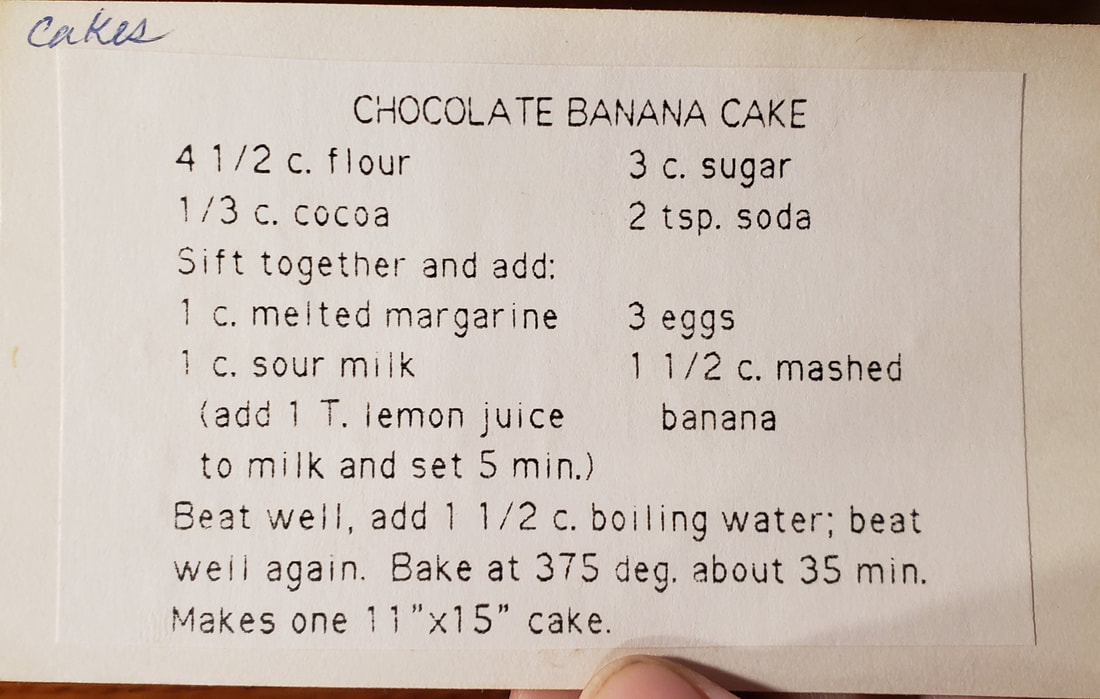
Sweetened Condensed Milk- use it to make my favorite, Two-Minute Fudge recipe.  For the closest version to a 14-oz can, use
1/2 c. (non-instant) powdered milk
1/2 c. water
1 c.  sugar
2 Tbsp. butter, optional
To read more about making it or how to use it, see here.
If you happen to need it, here's a recipe for dairy-free sweetened condensed milk 

Picture
Easy No-Bake Cheesecake  

Another great way to use sweetened condensed milk!


Do you love whipped cream but wished it would stay fluffy like whipped topping does?  
Cool-Whip, move over; your superior is here!  Airy, melt-in-your-mouth, delicately sweet, no hard-to-pronounce ingredients- what could be better?

Use this for topping pies, gelatin, cakes or cupcakes, or anything else you like!  Stir in a little caramel sauce and it's either an amazing dip for apples or an incredible cake filling.  Fold in some melted and cooled chocolate for a mousse-like topping.  White chocolate is delicious mixed in.

The version below that uses gelatin gives the most firmness.  I've kept it in the fridge for two weeks before, without the faintest hint
Yes, you can use this to decorate cakes!  (Just don't let it get too warm, it will melt if it gets above about 90 degrees F, just like butter does.)  This picture is my niece's wedding cake.

If you can't have dairy, use 8 ounces of chilled coconut cream to replace the dairy cream.  Not cream of coconut, that's different.  Coconut cream is the thick layer you find on top of canned coconut milk; Asian markets sell cans of straight coconut cream.

Stabilized whipped cream
½ pint whipping cream (8 oz)
½ tsp. vanilla
2 Tbsp. sugar or ¼ c. powdered sugar
1 Tbsp. Ultra Gel OR 1 tsp. unflavored gelatin*

If using Ultra Gel, stir it with the sugar, then add cream and vanilla and whip until stiff.  

If using gelatin, put it with a tablespoon of water, let it sit a minute to soften, then microwave for 12 seconds to dissolve it. You could heat gently on a stove, if needed.   Don't let it boil.  Whip cream, sugar, and vanilla until they start to thicken a little, then slowly pour gelatin in while still beating. Whip until stiff.  Chill it if you need it a little thicker.

Store any extra in the refrigerator.
__________________________________________________________
*Other ways to stabilize whipped cream:
(you can skip the Ultra Gel and gelatin if you use these)

-fold in 4-8 ounces melted and cooled chocolate (the more you use, the more truffle-like the frosting/mousse will be.  Also, the darker the chocolate, the less you need.)

-Beat in 2-4 ounces of cream cheese.

-Before whipping, sprinkle in half a package of instant pudding powder.  (This is really adding  Ultra Gel, which is part of the pudding mix.)

-Substitute 1 1/2 -2 Tbsp honey or corn syrup in place of the sugar, or 3 Tbsp. any flavor jam or jelly.  This will only lightly stabilize it, but works for things you'll eat in the next couple hours.
 
 
Some friends and I are in a healthy-living team competition right now... and there are just some times that the 'normal' healthy food doesn't cut it.  This does!  (So does Bavarian Mousse and the Chocolate Truffle Pie...)

Once again, this isn't technically sugar-free.  It is, however, free of table sugar if you don't add the chocolate topping, as the filling is sweetened with a sauce made with pureed fruit. If you choose to include the chocolate on top, it adds only 3 grams of sugar per serving.

Sugarless No-Bake Cheesecake
Makes 6 servings
Crust
1 1/2 Tbsp. coconut oil, melted
1/2 c. whole wheat bread crumbs (or other crumbs, or fine shred coconut)
Pinch of stevia, or 1/2 tsp. honey, optional

Line a 7” round pan with foil, then spray with nonstick cooking spray.  (A bread pan is the right size too- use an 8x4 pan for a thicker filling, 9x5 pan for a little thinner.)  Stir together oil, crumbs, and stevia.   Press on bottom of pan, set in freezer to chill.

Filling:
1/2 c. date caramel sauce
8 oz. cream cheese, softened (may use Neufchatel)*
1/3 c. plain yogurt
Pinch salt
1 1/2 tsp. vanilla
1 Tbsp. instant clear jel (Ultra Gel)

Beat together caramel sauce and cream cheese, until smooth.  Add yogurt, salt, vanilla, and clear jel; beat on high speed until light.  Spoon onto crust, smooth top and chill in fridge at least 30 minutes, but more firm after 2-3 hours.

Optional topping:
1/3 c. extra-dark chocolate chips
1/3 c. plain yogurt

Heat gently or microwave to melt; stir until smooth.  Spread on cheesecake after it has set.


*Since Neufchatel is softer, you'll need to increase Ultra Gel to 2 Tbsp.  Or serve the cheesecake frozen.
I've made this using cottage cheese instead of cream cheese, it still works.  Just plan on using a blender or food processor to mix the filling, and it'll take a couple minutes to get smooth.
 
 
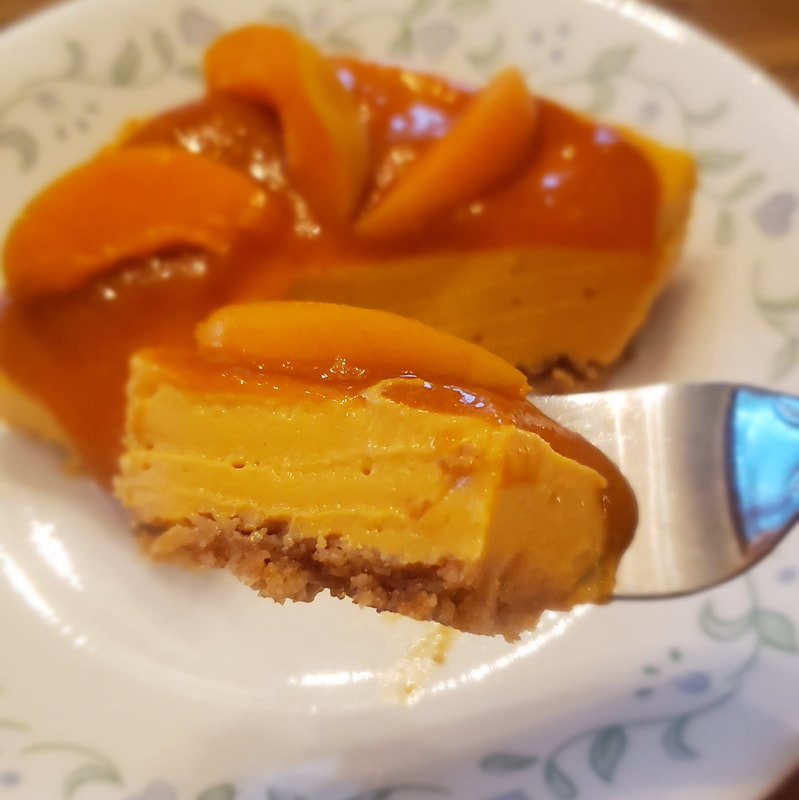
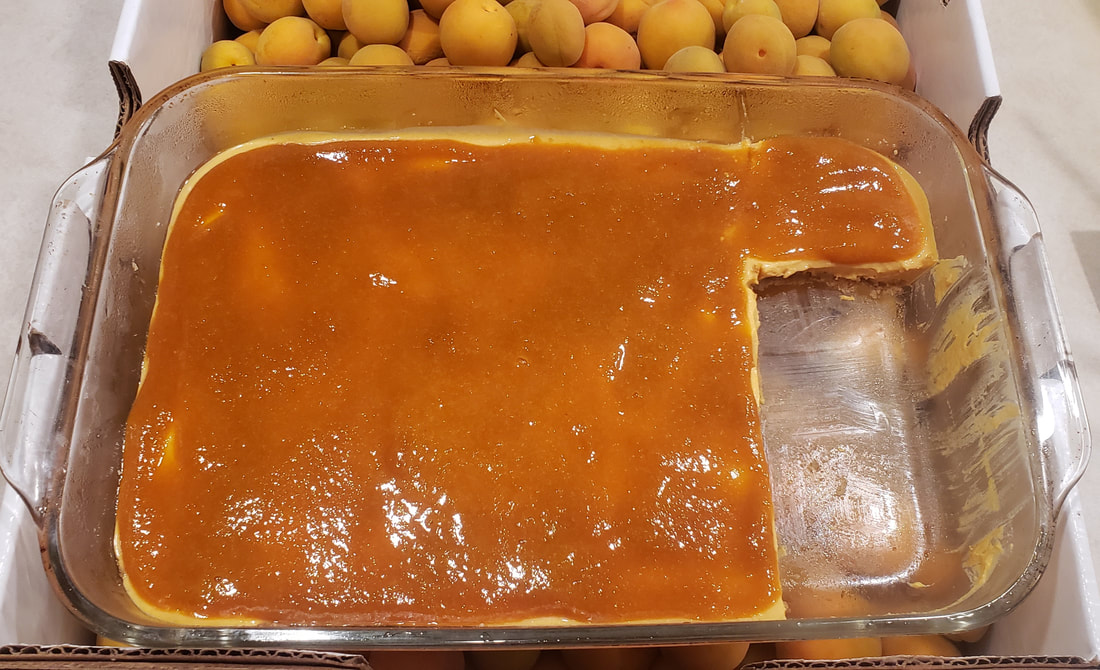
Somehow I've ended up with more dried fruit than planned, and it's getting a little old and turning dark.  Here's a new way to use it: a sugar-free caramel sauce!  Well, "sugar free" doesn't actually mean really all-sugar-free, BUT... all the sugar in this is naturally occurring in the fruit.  So it's no-sugar-added caramel sauce.  Unless you're a sugar addict, in which case you could add as much more sugar as you like!   This is a sauce to spoon, not to pour.  If you'd like it pourable, add more milk or some liquid honey or maple syrup until it's the consistency you want.

Next post will be for a rich, creamy, healthy no-bake New York style cheesecake, using this caramel sauce in the filling as the sweetener.

Fruit-sweetened Caramel Sauce

15 pitted dates (about 110g or 4 oz.)
1 to 1½ c. milk, any kind (I used coconut milk)
¼ c. melted browned butter or ghee, optional but helps give a caramel-y flavor
1/16 tsp. salt
1Tbsp vanilla

Blend until smooth, starting with the lower amount of milk; add more only if needed.  Makes about 1 1/2 - 2 cups.   If you don’t have a powerful blender, soak the dates overnight in the milk or simmer them together for 10 minutes, then puree.  If you prefer it sweeter, add a little honey, brown sugar, or stevia.

Try other dried fruits.  Peach is good.  Pear has naturally caramel undertones and would be delicious with a dash of cinnamon or coriander.  
 
 
Earlier this month there was a news story about a Florida father who found a note composed by his son as a school assignment where the boy wrote that he is willing to give up natural rights in exchange security. The dad is fuming.  On a related note, Melissa Harris-Perry of MSNBC recently turned heads by declaring that not only do our children belong to the community instead of the parents, but that citizens can vote “to impinge on individual freedoms in order to advance a common good."  Wait, others get to choose what my children are taught, in the name of what’s good for the collective?  That’s what’s happening now, and promising to become worse.

Many of us are upset because of the indoctrination in the schools.  

Want to fix it?  Here's the first problem:  there is no way to avoid "indoctrination"; the word literally means to teach or impress some kind of doctrine or principle.  There's no escaping it when any kind of teaching is the goal.

So, do I indoctrinate my children?   You bet! --if you're looking at the original meaning.  Any time you teach something, you 'indoctrinate'.  One of my parental responsibilities is to teach: to raise my children in light and truth. Because of this, my freedom of religion is also inextricably tied to how and what my children are taught:  I'm accountable to God for what I do or don't teach.  Nowadays most people only think of the negative connotation of ‘indoctrinate’- which has become the politically correct definition- the kind of teaching that stifles critical thinking.  More than one side sees the other as being guilty of this.

What we're actually upset with, then, is WHO is teaching WHAT to our children.  That leads to the main problem- our school system and its curriculum is set up with little to no local input, answerable to officials in varying levels of government.  Even more concerning, Common Core makes this issue increase dramatically.   One solution to the issue is to homeschool, but that is not an attractive or viable option for many people.  In addition, Common Core even stretches its tentacles into homeschooling through its database tracking system for all children, preschool through age 20, and by rewriting pre-college tests like the ACT.  

Here's what would solve the problem:  (1) return to local control of schools- and by this I mean the principal and the teachers of any one particular school, who will now make their own curriculum choices, including -gasp!- whatever religious instruction is wanted, and answer directly to the children's parents instead of government, and (2) allow parents to have their child attend whichever school they wish to attend; since each school will develop its own flavor of 'indoctrination', the parents can choose what is closest to their own beliefs.    Instead, now government arrogantly glosses over parental responsibility and attempts to replace God by making us all accountable to them. 

The family is the basic unit of society, with parental rights and responsibilities, and as such, parents should have the ultimate say in how the children are raised and what they are taught.  Let the schools be directly accountable to parents and recognize that the parents will eventually answer to God for how they teach, train, and treat their children.  As parents and citizens, please stand up for your rights to keep the federal government of our domain.
 
 
What happens when a favorite puzzle goes through six children and fifteen years?

I suppose it's impressive that the box even exists anymore, and that the puzzle pieces are still flat and whole.

But it was time for a new way of storing it.

The puzzle pieces fit nicely in a gallon-sized ziptop bag.  I cut out the top of the box so we'd still have the picture of what the puzzle looks like, then inserted it in the bag, too.   
As a bonus, it now takes up less space in the puzzle drawer!
 
 
A quick way to have tender, barbecue pulled beef is to start by having a roast a day or two before.  

On Sunday, I cooked a nearly 4-pound roast.  Once it was done, and before my family could dive into it, I cut it in half.  The first half was carved into slices for dinner.  The second half went in the fridge for another day. I used some storebought BBQ sauce this time, but if you'd like to get a recipe for a simple from-scratch sauce, see Mom's Barbecue Sauce.


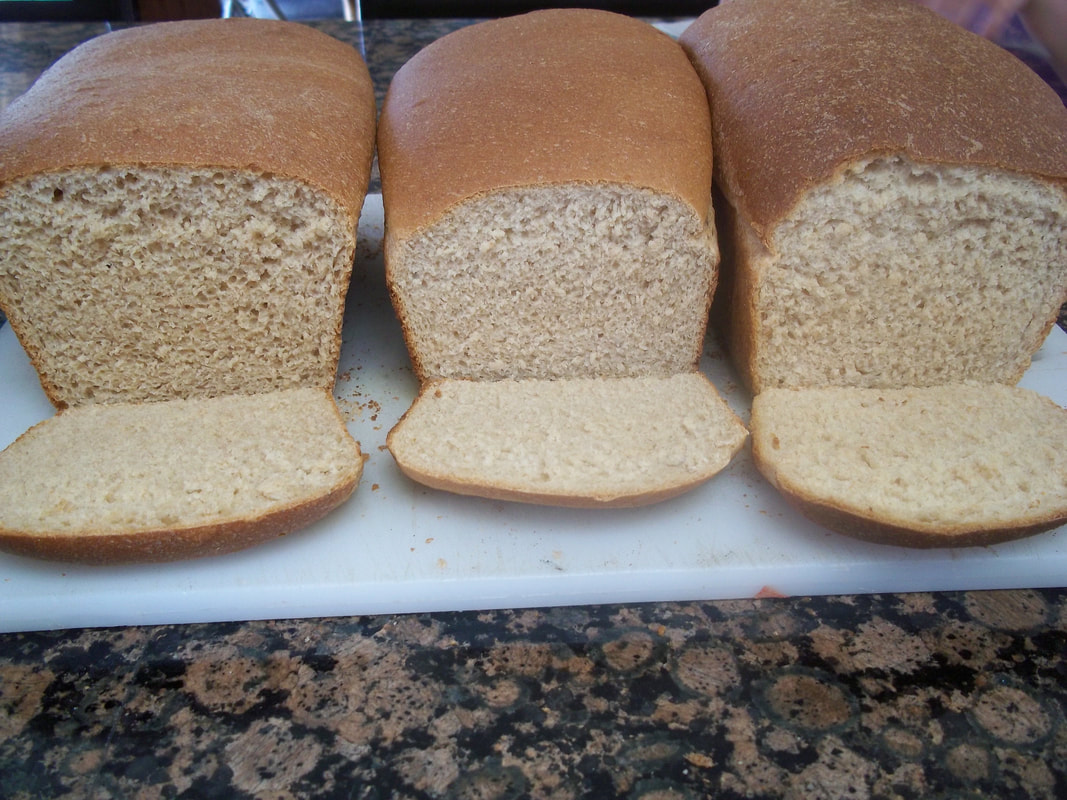
Today's version was served over fresh rosemary bread made with a little bit of orange marmalade mixed in.  That was a delicious combination- the bread, rosemary, orange, and barbecue!

Weeknight BBQ Beef

1 1/2- 2 lbs. cooked roast (you can use burger if you don't mind a different texture)
1 cup water
1 cup bottled barbecue sauce*

Combine in a large saucepan with a tight-fitting lid; simmer 30 minutes or until tender.  Shred meat using two forks.  The meat will absorb more of the liquid as it cools some; if it's too thick, add more water; if too thin, simmer a few minutes with the lid off to let water evaporate.

That's it!

*For a less sweet sauce, use 1/2 c. plain tomato sauce and 1/2 c. bottled BBQ sauce 


Picture
photo credit: Dario Sabio
You plant a grapevine, keep it watered, and it gives you juicy, crisp, sweet, pop-in-your-mouth grapes... so isn't that all there is to it?

Sort of.  

You can leave it at that, but you'll have more grapes and less disease problems if you prune it right- which can mean removing up to 80% of the plant!

Pruning helps the vine get the light it needs, better airflow (which reduces disease), increases production, and gives you a better-looking plant.  See the video below to watch how to prune properly.

For those of you who like to see the science and details behind it, check out this very good slide show about it.  This one is targeted  at commercial grape growers, but includes a lot of practical information for the average gardener.

Or read this short pruning summary- less than 2 minutes to read-  including categories of grapes.  I discovered from this one that my Niagara grapevine, being less vigorous than many, should have 3 buds left on each spur (stub left on the main vine), rather than the 2 shown in the video below. 

If you'd like to learn about all kinds of pruning for fruiting vines, shrubs, and trees, try the USU Extension Pruning handbook.  I have a hard copy of this same handout from when I took the Master Gardener course in about 1999.  I pull the booklet out almost every year and learn more each time.  The more I've pruned, the more I understand all of it...